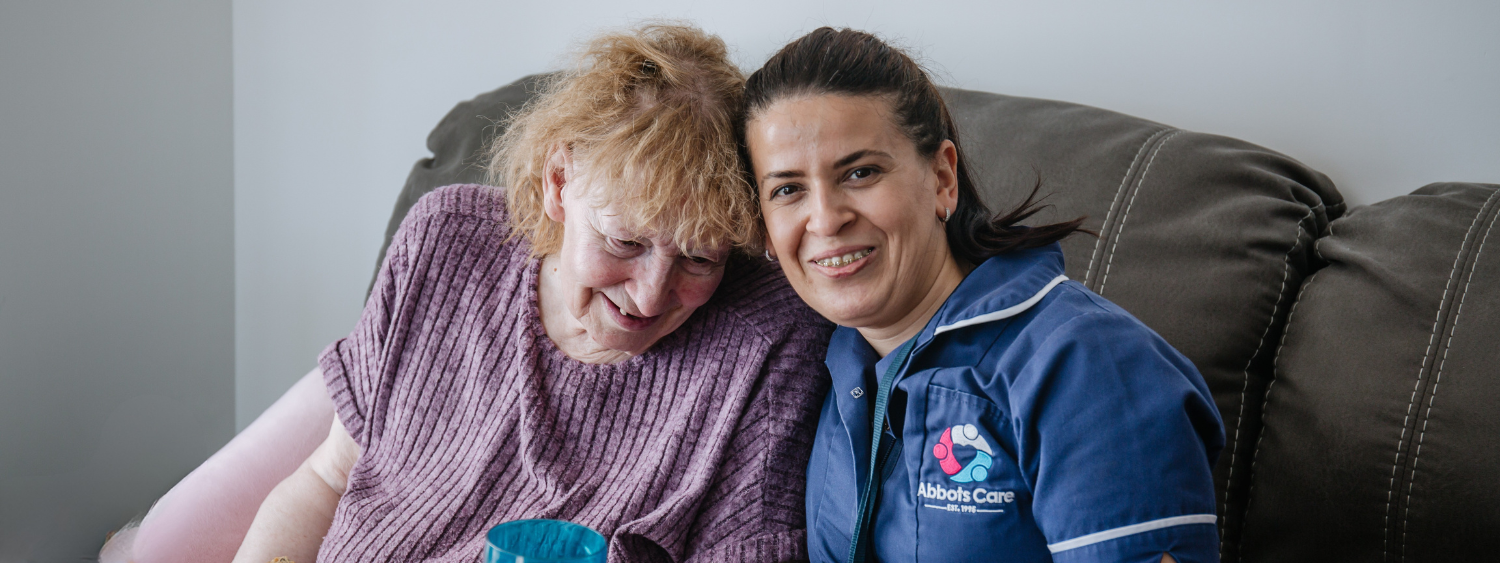
Domiciliary Care Worker: A Day in the Life
Making a Difference Just by Showing Up
If you could lift people’s spirits simply by turning up for work, would you do it? For domiciliary care workers, this is part of everyday life. Their role is not only about practical support, but about helping people remain independent in their own homes, while offering dignity, reassurance, and meaningful human connection.
Meet Anna
For Anna, a domiciliary care worker at Abbots Care, no two days are ever the same.
“I go door to door supporting different service users with different needs. Normally between eight and twelve per day,” she explains.
Inspired by her experiences supporting her grandparents who lived with dementia, Anna chose a career in care with a local provider. But her decision went beyond practicality.
“I realised that so many people need help with everyday living, and wanted to be a part of that, and help as many people as possible.”

From left to right: Michelle Stevenson, Jacki Page, Anna Simpson (Care Worker) and Alix Harvey
What Does a Typical Day Look Like
While every person she supports has different needs, there is a familiar rhythm to the day.
“In the morning we’re normally supporting to get the service user out of bed, helping them to get washed and dressed, then giving them breakfast,” says Anna. “Lunchtime is normally supporting with toileting and preparing food, and then it’s teatime, which is usually the same.”
Depending on her shift, Anna may also help people get ready for bed, support with required fluids, and administer medications. The focus is always on support rather than taking over, empowering people to live their lives as independently as possible.
More Than Practical Support
Support is a word Anna uses often, and for good reason. Domiciliary care is about being an extra pair of hands, gently helping someone through their day. But it is also about companionship.
This role is not simply about moving from one visit to the next and ticking tasks off a list. It is about listening, offering reassurance, and understanding what each person needs in that moment.
It is knowing what might make someone smile when they are feeling low, or being there to listen when they feel anxious. This human connection is at the heart of domiciliary care.
Life After the Shift
After a day spent supporting others, rest and recovery matter too.
“I tend to watch a wicked series on Netflix to unwind. Or relax in a hot bath,” Anna says.
It is well earned. For those who choose it, domiciliary care is a role built on compassion, flexibility, and genuine care for others, and one that leaves a lasting impact long after the shift ends.